Turning a Corner
In 2016, Tysons Corner was officially renamed to just Tysons to signal its shift from a suburban crossroads into a legitimate, high-rise urban downtown. More than just a marketing rebrand, the change stripped away the suburban connotations of the past to make room for a bold, multi-billion-dollar vision of a 'downtown of the future.'"
"Tyson's Corner" (with apostrophe, named after William Tyson): Likely someone who has lived in the area since the 1970s or earlier, or someone very invested in local history.
"Tysons Corner" (no apostrophe): The standard "old" name used by Gen X and Millennials who grew up going to the mall.
"Tysons": The modern, "correct" urban branding used by the city's new residents, developers, and the Metro.
The Origin Story: From Peaches to Parking Lots
Originally known as Peach Grove, this area was once a quiet, rural intersection located about 12 miles west of Washington, D.C. between the villages of Vienna and Falls Church. It eventually took the name Tysons Crossroads after William Tyson, a mid-19th-century postmaster who owned the local tract of land.
in the early 1960s, the construction of the Capital Beltway (I-495) and Dulles International Airport nearby turned Tysons Crossroads into some of the most accessible real estate on the East Coast.
Developers saw an opportunity, and in 1968, they opened Tysons Corner Center. At the time, it was one of the first massive indoor malls in the country. For decades, the area was the quintessential "edge city"—a place where people drove to work in mid-rise office parks or shop at the mall, but few people lived.
The Rebrand: Dropping the "Corner"
As the Silver Line Metro began carving its way through the landscape, Fairfax County planners realized the area’s identity needed to change. The "Corner" implied a suburban stopover; "Tysons" implies a city.
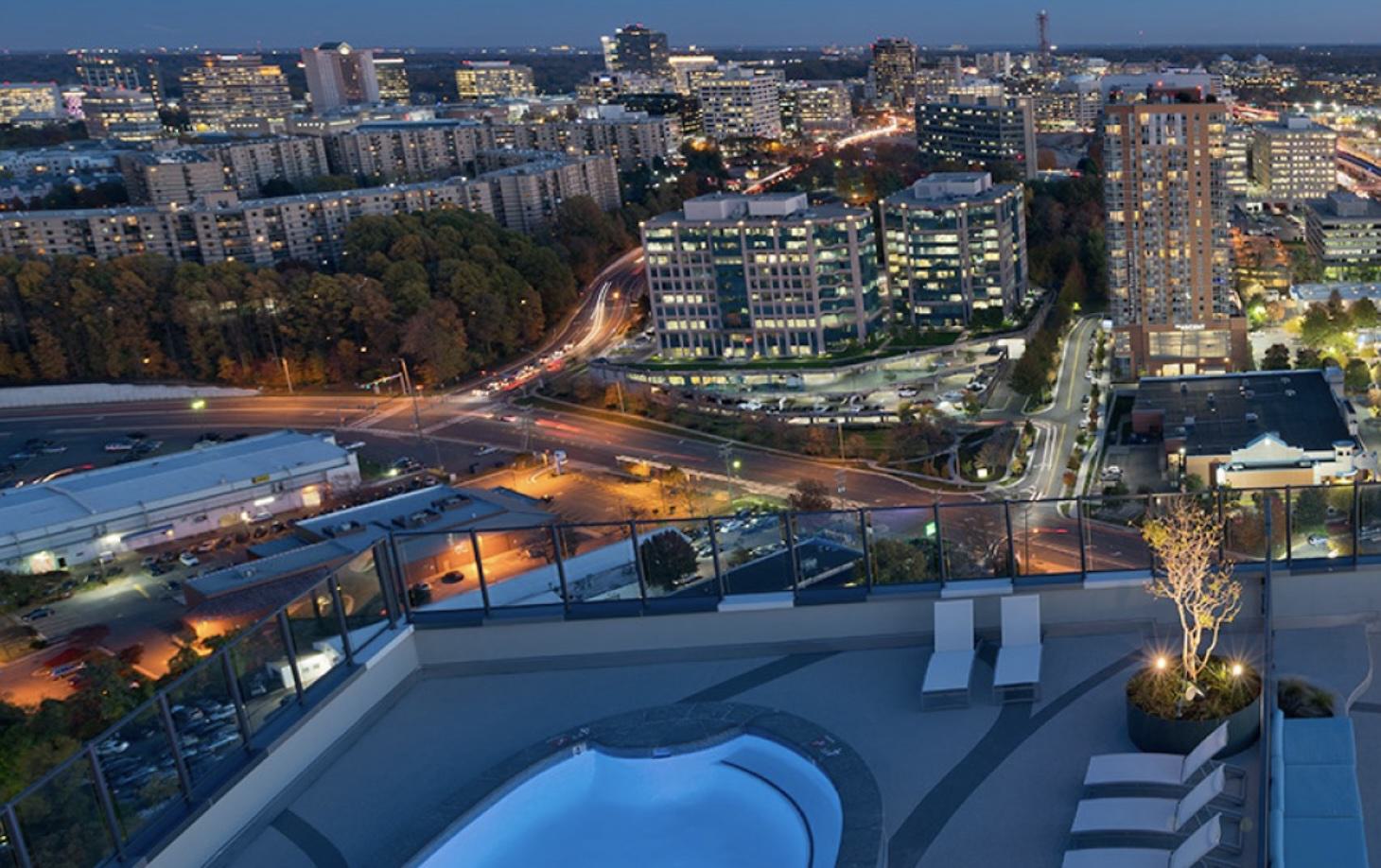
By officially shortening the name, officials signaled a massive shift in zoning and philosophy. They weren't just building more offices; they were building a walkable, vertical downtown. The goal is to transform Tysons into "America’s Next Great City," a true walkable, transit-friendly urban hub complete with everything you need for everyday life, work, and play:
Transit-First Living: Four dedicated Silver Line Metro stations allow residents to live car-free, with direct access to Dulles International Airport and downtown D.C.
Elevated Green Spaces: From "sky-high" amenities like The Perch's rooftop dog park and beer garden, to sprawling ground-level plazas like The Boro Park, to the lush, multi-use trails of the Vesper Trail.
Walkable Neighborhoods: Shifting away from massive blocks toward "human-scale" streets where grocery stores, pharmacies, and gyms are all within a five-minute walk.
A 24/7 Economy: World-class performing arts venues, late-night dining, exceptional shopping and dining, and year-round events and festivals.
Urban Density with Amenities: High-rise living that offers "resort-style" perks, including rooftop pools, coworking lounges, and high-tech fitness centers.
Sustainable Growth: Integrating smart-city technology and green architecture to create a modern, environmentally conscious urban footprint.
Tysons Today: A City Transformed
While the government and developers have fully embraced "Tysons," the old name hasn't vanished. You’ll still see Tysons Corner on the mall entrance and hear it from locals who have lived in Northern Virginia for decades.
Today, the area is the 12th largest employment center in the United States, serving as the headquarters for giants like Capital One and Hilton. However, the real success of the rebrand is visible in newer neighborhoods like The Boro or Capital One CenterIn these pockets,the "Next Great City" vision is actually coming to life—you’ll find people walking to dinner, visiting rooftop parks like The Perch, or catching a show at Capital One Hall.
Further west, the Spring Hill area it is now home to a growing residential community, anchored by the Spring Hill Metro and high-rises like Adaire. Here, the "America's Next Great City" vision comes to life, proving that Tysons is no longer just a great place to shop—it’s also a great place to live.